

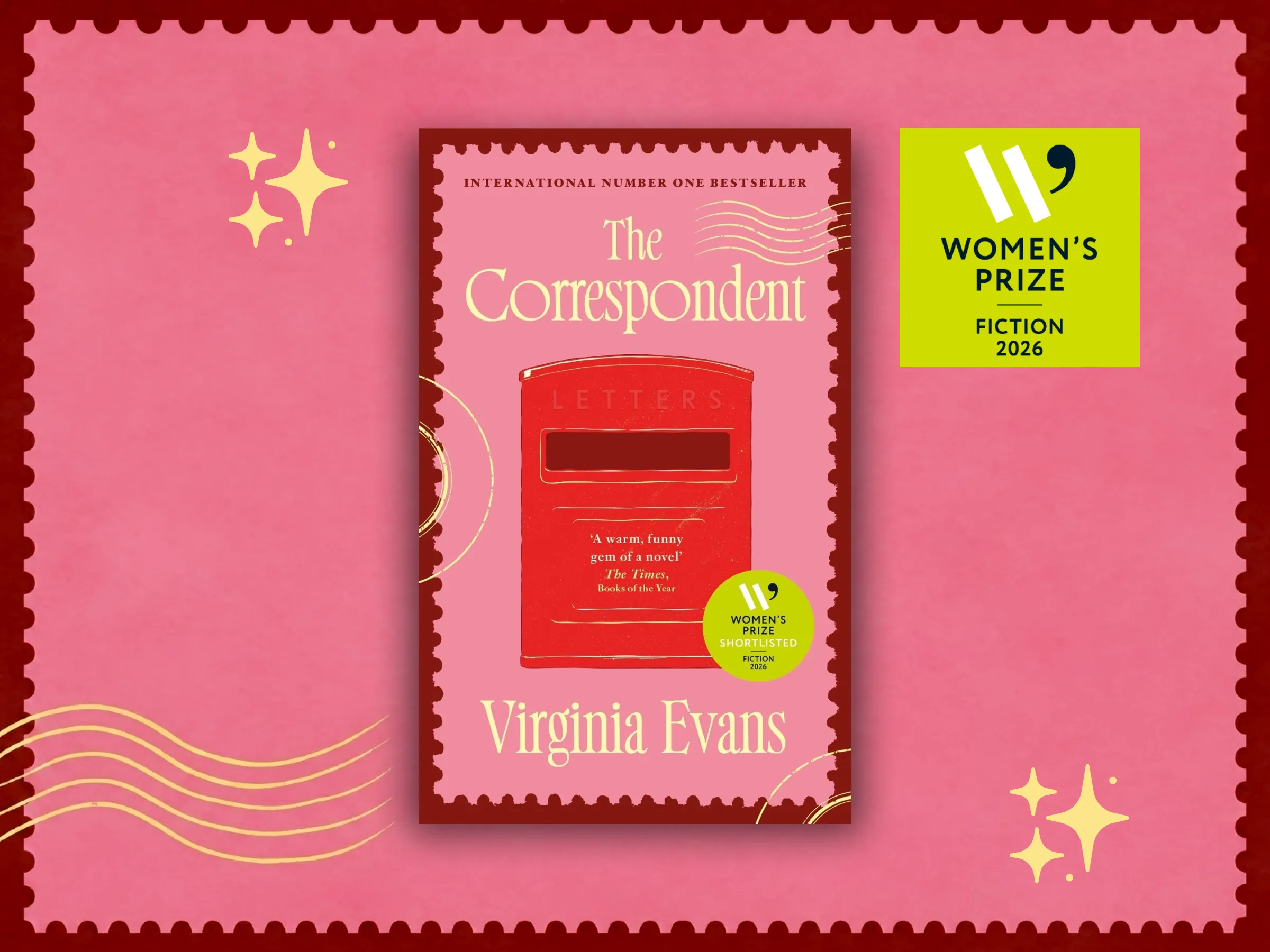
The Correspondent by Virginia Evans had been selling well since it was published last year. A real word of mouth bestseller. People just love it. Then it won The Women’s Prize and it has been flying off the shelf ever since.
Chair of the judging panel for the Women's Prize for Fiction, Former Australian Prime Minister, Julia Gillard said of The Correspondent:
'A remarkable novel, with an exemplary combination of originality, excellence and accessibility. It is no mean feat to write a life in letters, but Evans makes this feel effortless, asking the reader to consider the choices we make, whilst elevating an ordinary life in the most heartfelt of ways. The sheer skill required to render an emotionally resonant and engaging work in this format is spectacular. This is a novel that captured our hearts, and should be read and savoured by all.'
‘No mean feat to write a life in letters.’ What is she talking about?
The Correspondent is an epistolary novel, which is a novel told entirely, or told in large part, through letters, though in recent times we would include novels told via emails, texts, messages, social media posts etc.
In fact, over three hundred years ago, the novel was born on a crisp bed of written correspondence.
Letters had long been a major source of information, drama, intrigue and gossip. They would be read aloud, reread and shared. A popular letter writer would go out of their way to entertain their readers. I can easily imagine dull truths being teased and stretched into gripping falsehoods. The first step towards fiction.
Perhaps the first novelists were just the most entertaining liars. Perhaps they wrote brilliant letters but only ever received dull ones in return. It isn't much of a jump to imagine a bored and lonely writer fabricating brilliant responses to their own letters.
When you go back to the first novelists - Aphra Behn in the seventeenth century, Samuel Richardson in the eighteenth - it can seem astounding that the novel reached such a high level of excellence so quickly. But the letter writers had been at it for centuries, perfecting their style and sharpening their skills again and again. Especially the brilliant liars amongst them.
The funny thing is, for years, a novel made up of fraudulent letters was regarded as being more true than a simple straightforward tale. Mary Shelley uses letters to frame her outlandish story, Frankenstein, because they lent her novel air of respectability and put some distance between the real and the imagined.
But the epistolary novel has its drawbacks and difficulties, which I think Julia Gillard is referring to when she praises Virginia Evans, the author of The Correspondent, so effusively above.
Two of my favourite epistolary novels (and two of the best novels ever written), Samuel Richardson’s Clarissa and Pierre Choderlos de Laclos’ Dangerous Liaisons, are so engaging and the letters that make up the novels are written with such immediacy and intensity that you feel in the middle of the narrative, unless you stop to wonder how it was all done. Some of Clarissa’s letters appear to be written ‘live’ as the action is happening, and most of what happens to her is not pleasant, yet her style hardly suffers whether she is in floods of tears or joyous. And Lovelace, still the best baddie ever written, writes letters so voluminous that it would take more than a day to write and perfect, leaving him no time in the day to be the worst man alive.
As the audience for the novel grew and readers were more and more willing to pick up a book made up of lies without shame, the subterfuge of the epistolary novel wasn’t needed anymore and writers wrote false memoirs, that is, novels in the first person or decided to play god, knowing it all, as a third person narrator. It is said that Jane Austen first wrote Pride & Prejudice as an epistolary novel then rewrote it in the third person. No small task. But you will remember the crucial role letters play in Pride & Prejudice. Darcy’s letter is the turning point of the novel. And who can forget Captain Wentworth’s letter in Persuasion. But enough of that, I am getting hot under the collar.
So regardless of the drawbacks of the epistolary novel as a narrative form, as Virginia Evans’ The Correspondent attests, letters will always have a role in novels and epistolary novels are still being written very successfully. I suppose writers will always love a challenge just as readers will like a change from first person and third person narration every once in a while.
But is this something to write home about?
Classic Epistolary Novels
Modern Epistolary Novels
Related posts

5 Ways to Terrify Yourself
A classic ghostly mood, full horror immersion, apocalyptic tension, something weird and collectible or a haunted-house page-turner.

Page Turners: Literary Quiz 6.
Test your knowledge of the latest literary news, new releases and book-world moments.


Is Leonardo DiCaprio Hollywood's Biggest Bookworm?
Say what you will about Leo, but the man sure knows how to pick a project.

Page Turners: Literary Quiz 4.
Why do so many decent, law abiding people love to read about murder? (That's not a quiz question. It's just something that keeps me up at night.)

Page Turners: Literary Quiz 3.
From Romantic Comedies to daring Thrillers. Test your knowledge.